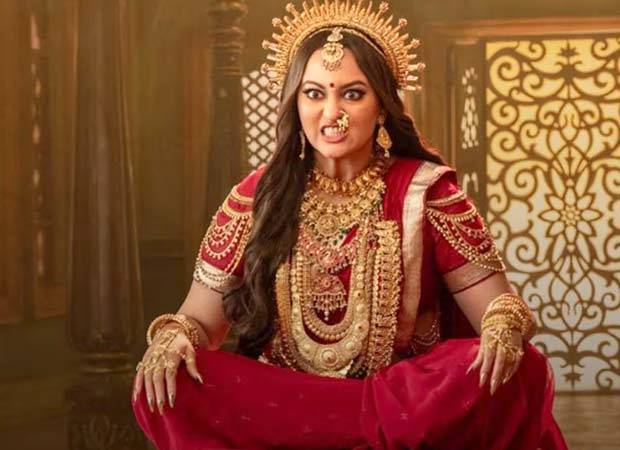
The answer to the question “Is Dhana Pisaachi real or fake?” is subjective and requires individual verification. Even if someone tells you that he/she has experienced Dhanapishachini, would you believe it? You might slightly believe it, but still would be skeptical. So, in general, if you believe in paranormal, like ghosts, black magic, etc., you would be inclined to believe that Dhana Pisaachi is real or vice versa. Many stories are circulating about this subject on the Internet, which might or might not be true. Therefore, in this article, I have tried to take both aspects into consideration and provide an unbiased explanation.
The idea of Dhan Pishachini (also spelled Dhana Pishachini) occupies a mysterious space between folklore, occult belief, tantra traditions, and psychological interpretation. In popular narratives, Dhan Pishachini is described as a supernatural feminine entity or spirit associated with wealth, sudden financial gain, hidden treasures, and material prosperity—often obtained through occult rituals or tantric practices. But the central question remains: Is Dhana Pisaachi real, or is it a myth shaped by cultural imagination?
To examine this objectively, it is necessary to explore both perspectives—those who believe in its existence and those who dismiss it as folklore or psychological projection.
What is a Dhana Pishachini?
A Dhan Pishachini is a type of female ghost that at first grants you huge wealth but afterward takes it back along with your life. Per some beliefs, she is just a guardian ghost and asks for human sacrifice for giving the wealth she is guarding.
How is Dhan Pishachini Created?
In olden times, when there were no banks, people used to bury their wealth underground. To protect the wealth, they used to sacrifice humans through a particular tantric ritual. The sacrificed humans turns to angry ghosts who guard the wealth ferociously. If someone wanted the wealth, he/she has to give a human sacrifice in return.
The second theory is that the females who died because of greed become Dhan Pisachinis and are cursed. To get rid of their curse, they lure other greedy people and get rid of their curses.
The Believer’s Perspective: Arguments for “Real”:
1. Roots in Tantra and Occult Traditions:
Believers argue that Dhan Pishachini is not a modern invention but emerges from ancient tantric and esoteric traditions of the Indian subcontinent. Certain occult manuscripts and oral teachings mention feminine astral entities that can be invoked for material gain. Practitioners of left-hand tantra (Vamachara) claim that specific rituals, mantras, and offerings can attract such entities.
In these traditions, Dhan Pishachini is not always portrayed as evil but rather as a morally neutral force—one that grants wealth in exchange for devotion, offerings, or life-energy. Some tantric practitioners describe her as a “wealth-guardian spirit” tied to buried riches or karmic fortune.
2. Testimonies and Anecdotal Accounts:
A significant portion of belief rests on anecdotal evidence. Stories circulate of individuals who allegedly performed rituals and subsequently experienced:
Sudden business success
Unexpected inheritance
Discovery of hidden money
Rapid debt clearance
These accounts, though unverified, reinforce belief systems—especially in rural and occult-leaning communities where oral testimony carries weight.
3. Cross-Cultural Parallels:
Supporters point out that wealth-granting spirits are not unique to Indian lore. Many cultures describe entities linked to treasure or prosperity:
Djinn guarding treasure in Middle Eastern folklore
Leprechauns and hidden gold in Irish myths
Yakshinis in Hindu-Buddhist traditions
From this lens, Dhan Pishachini is seen as one cultural expression of a universal archetype: the spirit custodian of wealth.
4. Experiential Claims by Practitioners:
Occult practitioners sometimes report sensory or dream encounters—visions of a feminine form, auditory whispers guiding financial decisions, or symbolic signs. They interpret these experiences as evidence of contact.
However, such claims remain subjective and non-replicable under scientific scrutiny.
“Real” Story of Dhana Pishachini:
In 1986, there was a poor farmer living in a village called Navgathiya near Bhagalpur. His name was Ramdev Yadav. Once while working in his fields in the evening, he saw something glittering near a tree. He dug up a little and found a gold coin.
From the next day, his luck changed completely. He started making huge profits in business and had plenty crop. Slowly, he became one of the richest people in the village. After some days, he and his family started hearing the sound of coins outside his home. His wife started finding long hair on her bed and smelling sulphur. She also noticed that her husband was talking to an unknown shadow.
Therefore, she invited a tantric to her house, who told her that the money in her house was cursed. It was given by a dhana pishachini who gives money but destroys the whole family. He advised them to put the coin back where they had taken it. If he does not do it on the next full-moon night, he will be dead.
When Ramdev went to put back the coin, he saw a female ghost there who told him that she would not take back the coin but would take the price of it from him. The next morning, villagers found Ramdev dead there with a gold coin in his mouth. Soon after the incident, his whole family was destroyed.
Villagers claim that they hear the sound of coins and see a female ghost clad in a white saree under the tree every full-moon night.
The Skeptic’s Perspective: Arguments for “Fake” or Psychological:
1. Lack of Empirical Evidence:
There is no scientific documentation, controlled experiment, or verifiable proof demonstrating the existence of Dhan Pishachini. Wealth accumulation following rituals can be explained through coincidence, confirmation bias, or behavioral changes (e.g., increased risk-taking, confidence, or focus). In scientific methodology, anecdote does not equal evidence.
2. Psychological Projection and Suggestibility:
Human cognition is highly suggestible—especially under ritualistic environments involving chanting, fasting, sleep deprivation, or sensory focus. These conditions can induce:
1. Hypnagogic visions.
2. Auditory hallucinations.
3. Altered states of consciousness.
Psychology interprets “entity encounters” as projections of the subconscious mind rather than external spirits. Carl Jung’s archetype theory is often applied here: wealth spirits may symbolize internal desires for prosperity rather than literal beings.
3. Socioeconomic Motivations Behind the Myth:
Skeptics also analyze the narrative through a sociological lens. In economically strained environments, belief in supernatural shortcuts to wealth becomes appealing. Ritual specialists or occult intermediaries may benefit financially by offering “invocation services,” yantras, or mantras.
Thus, the Dhan Pishachini myth may function as:
1. A hope mechanism for the poor.
2. A psychological coping tool.
3. A commercial construct within occult markets.
4. Cognitive Bias and Selective Memory
When individuals perform wealth rituals, they may subconsciously adjust behavior—working harder, spotting opportunities, or taking bolder financial decisions. Success is then attributed to the entity, while failures are ignored.
This is classic confirmation bias:
Success → “Proof she is real.”
Failure → “Ritual done incorrectly.”
The belief becomes self-reinforcing.
Folklore and Symbolic Interpretation:
Between “real” and “fake” lies a symbolic interpretation.
In many tantric and mythological systems, spirits represent energies or psychological forces rather than literal ghosts. Dhan Pishachini may symbolize obsession with wealth, the seductive power of money, the karmic cost of greed, and the dark feminine archetype, which is linked to material desire.
In this reading, rituals are not summoning spirits but conditioning the practitioner’s mind toward wealth acquisition through focus, visualization, and intention setting.
Modern self-help parallels exist:
1. Law of Attraction.
2. Wealth visualization.
3. Affirmation rituals.
The difference lies mainly in symbolic language.
Risks Associated with the Belief:
Regardless of ontological reality, belief in Dhan Pishachini can carry psychological and practical risks:
1. Financial Exploitation
Individuals may spend large sums on rituals, yantras, or occult services with no guaranteed outcome. Nowadays, most tantrics are frauds. They just want to exploit you. There are many cases of rapes and murders committed by such people.
2. Psychological Dependence
Attributing wealth to an entity may reduce personal agency and accountability in financial decision-making.
3. Fear-Based Narratives
Some traditions warn that once invoked, the entity demands offerings or causes harm if neglected. Such beliefs can induce anxiety, paranoia, or guilt.
4. Ethical Conflicts
Wealth gained through occult bargaining is sometimes framed as karmically tainted, leading to moral distress among believers.
Why the Belief Persists?
Even without scientific validation, Dhan Pishachini’s belief persists due to several reinforcing factors, such as cultural transmission through stories, tantra’s secrecy and exclusivity, human attraction to hidden knowledge, desire for rapid wealth, confirmation through coincidence, and mystery itself sustains belief—what cannot be disproven easily remains plausible in the popular mind.
Comparative Lens: Faith vs. Falsifiability:
| Source | Tantra, folklore | Mythology |
| Evidence | Testimony, ritual experience | None empirical |
| Mechanism | Spirit grants wealth | Psychology & behavior |
| Risk | Spiritual backlash | Financial/mental harm |
| Nature | Literal entity | Symbolic archetype |
Neutral Analytical Assessment:
From an academic standpoint, anthropology treats Dhan Pishachini as folklore. Psychology views encounters as subconscious projections. Sociology links belief to economic aspiration. Occult traditions treat her as an invokeable astral force.
No peer-reviewed scientific framework validates her literal existence. However, dismissing the belief outright ignores its cultural, symbolic, and psychological significance.
Conclusion:
So, is Dhana Pisaachi real or fake?
As far as I am concerned, I believe in such things. So, I think she is real, but I have never experienced any Dhana Pishachini thus far; I have other paranormal and divine experiences. But if you need solid proof, then you have to experience such things by yourself, which is very risky. Doing such rituals on your own is not advisable, and you can take the help of a reputed tantric who is not greedy.
As far as scientific studies are concerned, even if scientists find it was real, they would never accept it because if they accept the existence of a ghost, they would have to accept the existence of God, soul, and other things also. Already so many crimes happen related to occult and paranormal things. Imagine what would happen if scientists also validated such things. So, finding a scientific answer to “Is Dhana Pisaachi real or fake?” is impossible.
Within tantric-occult belief systems, she is considered real—an entity capable of influencing material outcomes.
Within scientific and empirical frameworks, there is no evidence supporting her literal existence.
Within symbolic psychology, she represents the human fixation on wealth and the unconscious forces driving financial ambition.
Thus, for believers, she is real; for skeptics, she is not.
Image Source: Jatadhara Movie Poster