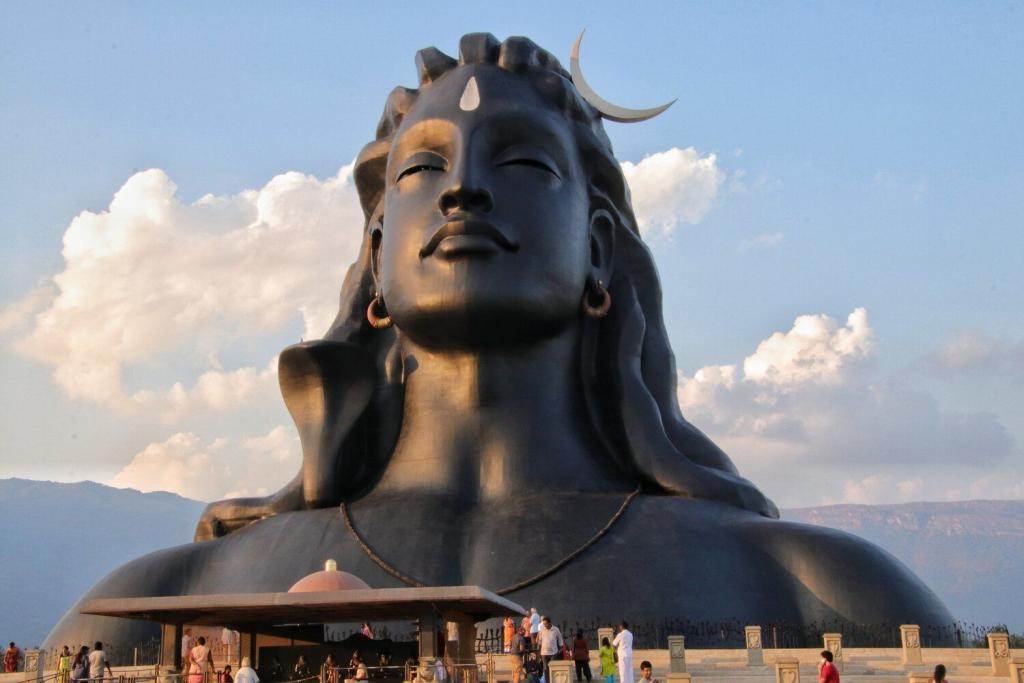
Mahashivratri means “the Great Night of Lord Shiva.” It is one of the most important Hindu festivals. It is the biggest festival of Lord Shiva. There is a Shivratri every month of the Hindu calendar on the 13th night/14th day of the waning moon. Therefore, there are a total of 12 Shivratris in a year, but Hindus celebrate Mahashivratri only once a year. It is also known as Har-Ratri, Haerath, or Herath by Shaivites in the Kashmir region. Tantrics call it Kaalraatri.
When is Mahashivratri celebrated?
The Shivratri, i.e., the 13th night or 14th day of the dark half of the month of Magha, is celebrated as Mahashivratri. It falls in February or early March per the Gregorian calendar. Some websites mention that Mahashivratri falls in Phalguna, but it is incorrect because, according to the Shiva Purana (4.38.24), Mahashivratri should be celebrated in the month of Magha.
The Shiva Purana states, “In the dark half of the month of Magha, Shivaratri is specifically glorified. The rite of Shivaratri is performed when the Chaturdashi extends up to midnight.”
The Wikipedia article mentions that, according to the South Indian Calendar, it is celebrated in the month of Magha and other parts of India in Phalguna. I checked the days for the last few years and found that it was in the month of Magha all the time.
Why is Mahashivratri celebrated?
A. The main reason behind celebrating it is that the universe was created on this day.
At the end of the Kalpa (4.32 billion years), Lord Vishnu and Lord Brahma argued about who was superior. The argument turned into a furious fight between them when suddenly a Jyotirlinga, a huge, infinite pillar of light, appeared before them.
They forgot their fight and decided to test it. Lord Brahma assumed the form of a swan and went upwards. Lord Vishnu took the form of a boar and went downwards. They both traveled for one thousand years but could not find the end of the lingam. Therefore, they returned to where they started.
They saw Lord Shiva and Goddess Uma coming out of it. Lord Shiva told them they were both born out of him, but had forgotten about that. This event depicts the creation of the universe. The day this happened is celebrated as Mahashivratri.
B. To celebrate the wedding anniversary of Lord Shiva and Goddess Parvati.
After the death of the goddess Sati, Lord Shiva went into deep meditation. In the meantime, Sati was reborn as Parvati, the daughter of Himalaya. She undertook severe penance to propitiate Lord Shiva and was successful in doing so. Hindus believe that they got married on this night. Therefore, Mahashivratri is celebrated as their wedding anniversary.
C. As a thanksgiving to Lord Shiva for saving the three worlds.
When gods and demons started to churn the ocean of milk to get Amrita (elixir of life), the first thing that appeared from the sea was Halahala (poison). This poison was so deadly that the three worlds would have been destroyed if it had spread. Therefore, gods and demons requested Lord Shiva to help them.
Lord Shiva accepted their request and started drinking the Halahala. If the poison had spread in his body, it would have been harrowing for him. Therefore, Goddess Parvati stopped the poison from entering his body and let it accumulate in his throat. Thus, the throat of Lord Shiva turned blue, and he is called Neelkantha.
D. Lord Shiva performs the cosmic dance on this night.
On this night, Lord Shiva performs the heavenly dance of creation, preservation, and destruction.
E. Benefits of Celebrating Mahashivratri:
The Shiva Purana says, “The observance of the rite on Mahashivratri quells the sin of even a crore of human slaughters.” This should not be taken literally. It actually explains how fruitful Mahashivratri is.
Lord Shiva Himself says the following things in the Shiva Purana (Vidyeshwara Samhita, Chapter 9, 11-17):
“Dear children, I am delighted by your worship on this holy day. Henceforth, this day will be famous as “Śivarātrī,” the holiest of holy days, pleasing to me. He who worships linga and the embodied image on this day will be competent to perform the task of creation and the maintenance of the universe. The devotee shall observe fast on Śivarātrī, both day and night. He shall perfectly restrain his sense organs. He shall adore (with flowers) to the extent of his strength. He shall not deceive anyone. By the worship, on Śivarātrī day, the devotee attains that fruit which usually accrues to one who continuously worships me for a year. This is when the virtue of devotion to me increases like the tide in the ocean at the rise of the moon. Festivities like the installation of my idols, etc., on that day are very auspicious. The day I manifested myself as a column of fire is the Ardra star in Margashirsha (November-December), O children. He who sees me on the day of Ārdrā star in the month of Mārgaśīrṣa in the company of Umā and worships my linga or embodied image is dearer to me than even Guha (Kartikeya). On that auspicious day, the vision alone accords ample results. If he worships too, the result cannot be adequately described.”
The Hunter and the Deer – A Story from the Shiv Purana.
Once upon a time, there was a hunter named Gurudruha. He was a ruthless person. But on one day of Shivaratri, he inadvertently worshiped the Shiva Lingam while hunting. This created pity in his mind for the deer he captured, and he repented for his sins. He also let go of all the deer. This propitiated Lord Shiva. He appeared before him and blessed him.
F. Scientific reasons behind celebrating Mahashivratri:
1. According to Jaggi Vasudev aka Sadhguru, “On this night, the planet’s northern hemisphere is positioned in such a way that there is a natural upsurge of energy in a human being. This is a day when nature is pushing one towards one’s spiritual peak. It is to make use of this that we established a certain nightlong festival in this tradition. To allow this natural upsurge of energies to find their way, one of the fundamentals of this nightlong festival is to ensure that you remain awake with your spine vertical throughout the night.”
I personally don’t endorse this reason. I have never heard of such a thing.
2. Eating wood-apple fruit is good for health. People usually don’t eat this fruit, but on this day, it is distributed as prasadam.
3. Drinking Thandai is also good for health, but don’t mix a large amount of Bhang in the milk.
4. A 24-hour fast detoxifies our body, although it could be fatal for some people.
5. Remaining awake for the whole night gives a break from the routine. Especially in ancient times, it was a good diversion for the people.
How to Celebrate Mahashivratri?
There are many ways people celebrate Mahashivratri. These differ from region to region, but you must do some basic things to appease Lord Shiva.
1. Get up early in the morning and take a bath.
2. Go to a Lord Shiva temple, especially where a Shiva Lingam is installed, and offer bel leaves. If possible, offer milk and other things, and also do something that will please him.
3. Observe a fast for the whole day and night.
4. Don’t hurt anyone physically or emotionally.
5. If possible, don’t eat or drink anything. If you can’t tolerate a strict fast, then at least don’t eat any non-vegetarian food.
6. Stay awake all night and indulge in the worship of Lord Shiva.
7. Chant Om Namah Shivay as much as you can.
How is Mahashivratri celebrated across the world?
Millions of Hindus visit Lord Shiva temples on this day. Some people drink Bhang (edible preparation of cannabis) as prasadam on this day. Many Hindus observe a half-day fast, while some observe a full-day fast. Some people organize processions.
In Gujarat, a Mahashivratri Mela (fair) is held at Bhavnath near Junagarh. People bathe in Mrugi Kund (a holy pond) where it is believed that Lord Shiva himself comes for a bath.
Fairs are organized in many states across India on this day.
In some regions, the wood-apple is distributed as prasadam. Some people drink thandai (an Indian cold drink with almonds, fennel seeds, watermelon kernels, rose petals, pepper, poppy seeds, cardamom, saffron, milk, and sugar) mixed with Bhang.
It is a national holiday in Nepal and is celebrated with great enthusiasm.
Har Har Mahadev!