
Lord Shiva, also called Mahadeva (the god of gods), represents the destructive aspect of the Supreme God, Brahman. He is one of the three major Hindu gods, collectively called Tridev. He is known as the pure one, transcending space and time. His divine iconography is rich with symbols that encapsulate complex Hindu philosophical and spiritual truths. These symbols serve as spiritual teachings embedded in form.
In this article, we will journey through the most important Shiva symbols, discussing their meaning, origins, and spiritual significance.
1. The Shiva Lingam: The Form of the Formless
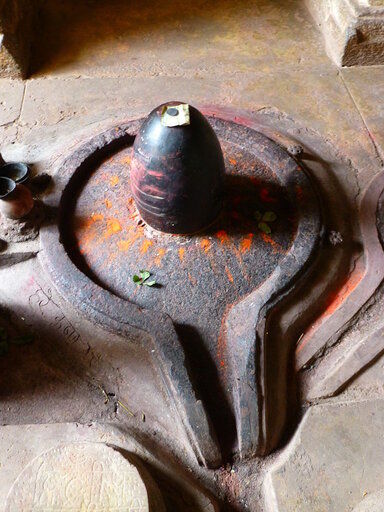
The Shiva Lingam, or linga, is one of the most prominent and ancient symbols associated with Shiva. The word linga in Sanskrit means ‘sign or symbol’.
- Ultimate Reality: The Lingam is considered the form of the formless (Nirguna Brahman), serving as a tangible object that provokes insight into the intangible or transcendental reality. It is a symbolic container of the idea that God cannot be contained by space or time.
- Cosmic Balance: The cylindrical pillar of the Lingam often rests on a circular or square pedestal called the yoni, symbolizing Shakti, the divine feminine energy. This union of linga (Shiva/consciousness/Purusha) and yoni (Shakti/nature/Prakriti) represents the cosmic balance, the source of creation, and the eternal cycle of life.
- Forms and Manifestations: The Lingam is also linked to the story of Shiva emerging as an endless pillar of fire (Lingodbhavam), symbolizing His infinite nature. Lingams can be found as natural ice formations (like the Icicle Shiva-linga in Amarnath, Jammu), carved cylindrical pillars, or natural rock formations.
- Meditative form of Shiva: It can also be interpreted as a simplified abstract representation of Lord Shiva in meditation, with the pillar representing His head and trunk and the base representing His folded legs.
2. Nandi, the Divine Bull: Strength and Devotion
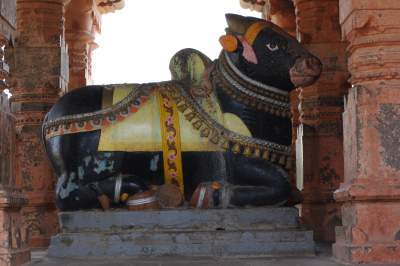
Nandi is the official mount or vahana of Lord Shiva.
- Strength and Loyalty: The bull symbolizes strength and loyalty. Nandi is often positioned directly in front of Shiva temples, highlighting its importance as a guardian and a profound symbol of devotion.
- Dharma: Nandi embodies dharma (righteousness). Sitting in eternal meditation before the Shiva Lingam, Nandi teaches us the values of loyalty and discipline. Devotees often whisper their prayers into Nandi’s ears, believing the bull delivers them directly to Shiva.
3. The Serpent (Vasuki): Mastery Over Time and Fear

Lord Shiva is frequently depicted wearing a serpent, specifically Vasuki, the King of Nāgas, gracefully coiled around His neck.
- Fearlessness and Time: The serpent signifies Shiva’s mastery over time (Kaal) and death, making them seem like mere ornaments. The cobra coiled three times around His neck depicts the cycle of past, present, and future time.
- Spiritual Energy (Kundalini): The snake symbolizes Kundalini Shakti, the coiled spiritual energy that lies dormant at the base of the spine. When Shiva wears Vasuki at his throat (Vishuddha Chakra), it shows the culmination of this awakening and the ability to express truth without fear.
- Stillness: The hooded serpent also represents the stillness of the mind (the alert Tapasvin) who watches the world with full attention. Vasuki chooses to rest on Shiva, symbolizing that powerful primal energies seek surrender before absolute stillness.
- Immortality: Serpents are known for shedding their skin and renewing themselves. Hence, many think that they are immortal and are symbol of immortality.
4. The Trishul (Trident): Will, Knowledge, and Action
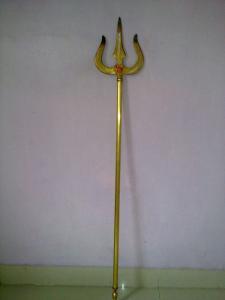
The Trishul is one of the most widely recognized and sacred symbols of the Shaivite sect. Tri means three, and shool means problems or suffering.
- Three Powers: The three prongs of the trident symbolize Shiva’s three fundamental powers: Will, Action, and Knowledge.
- Cosmic Triplets: The prongs represent the three aspects of the Hindu Trinity—Brahma (Creator), Vishnu (Preserver), and Shiva (Destroyer). They also symbolize the three gunas (Sattva, Rajas, and Tamas) and the three states of consciousness (waking, dreaming, and deep sleep).
- Destroyer of Suffering: The Trishul is that which destroys all kinds of suffering. It removes the three types of pain: physical (Aadibhautik), spiritual (Aadhyaatmik), and ethereal (Aadidaivik).
- Control of three realms: The trident goes beyond physical might. It signifies the control of three realms—physical, mental, and spiritual.
5. The Crescent Moon (Chandra): Controller of Time and Mind
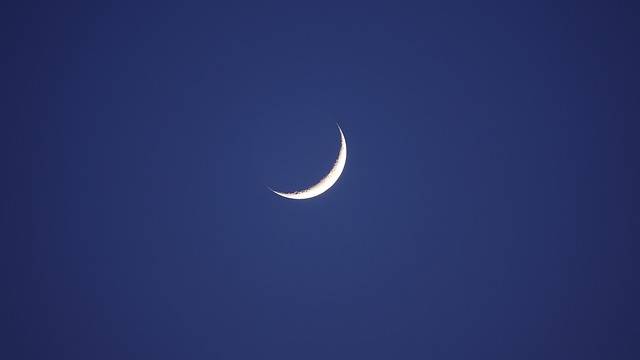
Shiva wears the crescent moon (Ardha Chandra) of the Panchami moon on the right side of His head, intertwined with his matted hair.
- Dominance over Time: The crescent signifies Shiva’s control over time, reflecting the waning and waxing cycles of the moon. Since Shiva is the Eternal Reality, He is beyond time, making the crescent moon an ornament.
- Soothes the Mind: The moon symbolizes the cooling and soothing influence of Shiva over the wavering human mind. In yogic terms, the moon represents the mind (or ego), and the crescent shape signifies that Shiva has controlled the mind perfectly, showing “very less ego”.
- Procreation: The moon denotes the power of Soma and represents Shiva’s power of procreation alongside destruction.
6. River Ganga: Knowledge and Spiritual Flow
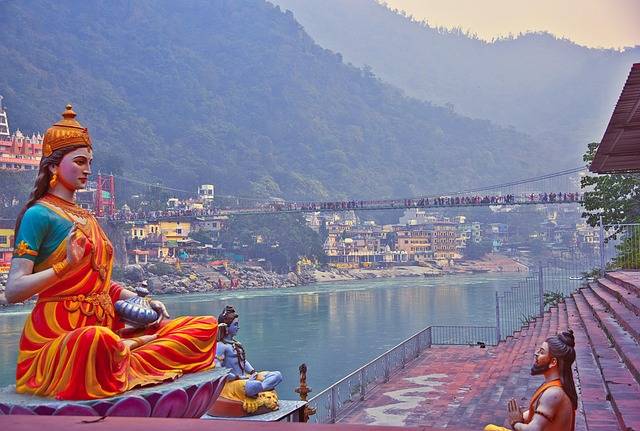
The Holy River Ganga is depicted flowing from the crown of Shiva’s matted hair.
- Container of Force: Shiva agreed to break the force of Ganga as it descended from the sky (Milky Way) by standing underneath it, becoming Gangadhara (bearer of Ganga). His mighty dreadlocks contained the river’s force, allowing it to spring forth as a gentle stream. This is symbolic of Shiva containing the strength of material reality so it does not overwhelm the earth.
- Symbol of Knowledge: Emerging from Shiva’s head, the Ganga symbolizes knowledge that purifies the soul, brings freedom, and is constantly in motion. It represents spiritual cleansing and divine mercy.
- Purity: The river Ganga removes the sins of all who bathe in her waters. Everything that comes into contact with her becomes pure.
7. Tripundra: Immortality and Transcendence

The Tripundra is Shiva’s sacred mark, consisting of three parallel horizontal lines of ash (bhasma or vibhuthi) drawn across the forehead.
- The Indestructible Soul: Ash is the indestructible residue after the body dies. The bhasma symbolizes the mortality of the body and draws attention to the indestructible soul (atma).
- Three Worlds/Gunas: The three horizontal lines represent the three worlds; physical, subtle, and causal. These lines also signify the three gunas (sattva, rajas, and tamas) or the three modes of time (past, present, future).
- A Reminder of Inertia: In mythic art, horizontal lines, unlike the vertical lines associated with Vishnu, represent inertia, reminding us that eventually, everything material will collapse as nature stakes its claim.
The central dot (Bindu) represents Shiva’s third eye and symbolizes moksha.
8. Rudraksha: The Eye/Tear of Shiva

Shiva is often adorned with garlands of Rudraksha beads.Rudraksha literally translates to ‘the eye/tear of Shiva’.
- Spiritual Detachment: Shiva is bedecked with these seeds, symbolizing detachment and the inward quest for independence and infinity.
- Aiding Practice: These beads are spiritually powerful, used for chanting mantras and prayers, and warding off evil forces, connecting the disciple with Shiva’s divine power.
9. Damru (Drum): The Cosmic Vibration
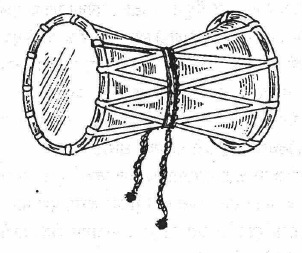
The Damru is a small, two-sided drum often seen in Shiva’s hand or attached to his Trishul.
- Cosmic Sound: The sound of the Damru is considered the first sound in the universe (nada, or the cosmic sound of aum), representing the pulsation and harmony between creation and destruction.
- States of Existence: The two sides of the drum symbolize the two different states of existence—unclear and clear. Shiva holding the Damru signifies His role as the creator and protector of the universe.
- Creation and Destruction: The Damru also represents cycles of creation and destruction, life and death. Each beat is believed to align the universe with eternal rhythm, strengthening Shiva’s role as Nataraja, the cosmic dancer.
10. Mount Kailash: The Abode of Wisdom and Stillness
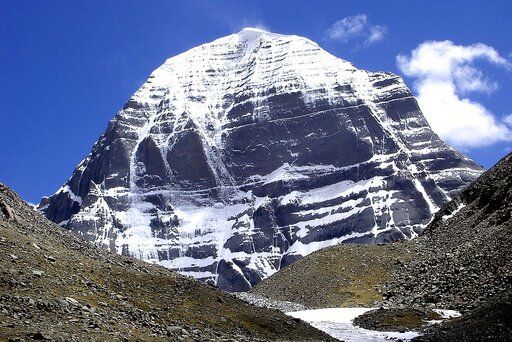
Mount Kailash is Shiva’s abode, a snow-capped mountain. It represents stability, unshakable strength, and ultimate liberation.
- Realm of Wisdom: Kailash is often considered the realm of stillness and wisdom. Shiva is visualized sitting under the Pole Star on this snow-capped mountain, communicating the idea of spiritual reality.
- Celebration and Void: The name Kailasa means ‘where there is only celebration’. The divinity dwells here, as well as in the cremation ground (smashana), symbolizing that Shiva dwells in both celebration and void.
- Ascetic Observation: Shiva watches the world and culture from his distant position on Kailash, patiently waiting for humanity to outgrow its animal instincts.
Conclusion: The Eternal Language of Symbols
Studying the symbols of God Shiva unfolds a tapestry of wisdom, devotion, and philosophy. Each emblem, whether Nandi’s steadfast loyalty or the Lingam’s cosmic essence, carries profound truth. While many look at them as religious representations, their deeper significance transcends culture and time, guiding humanity toward balance and awareness.
Thus, the symbols of Lord Shiva remind us that divinity often communicates through metaphors. They are silent teachers, bringing spiritual insights into daily life and pointing us toward deeper truths about existence.